From The Lab: The Scarcity Equation - Why Luxury Brands and Live Sports Are a Perfect Match
Issue #11- January 2, 2026

What It Means
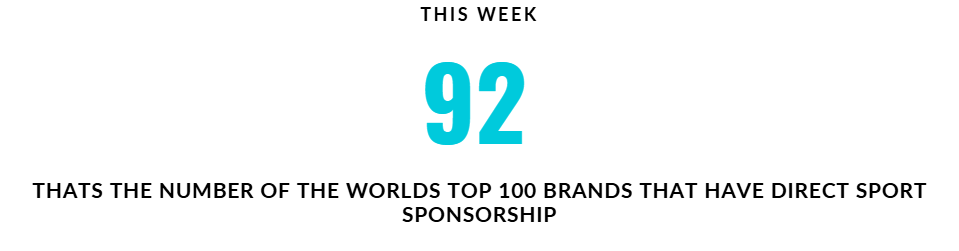
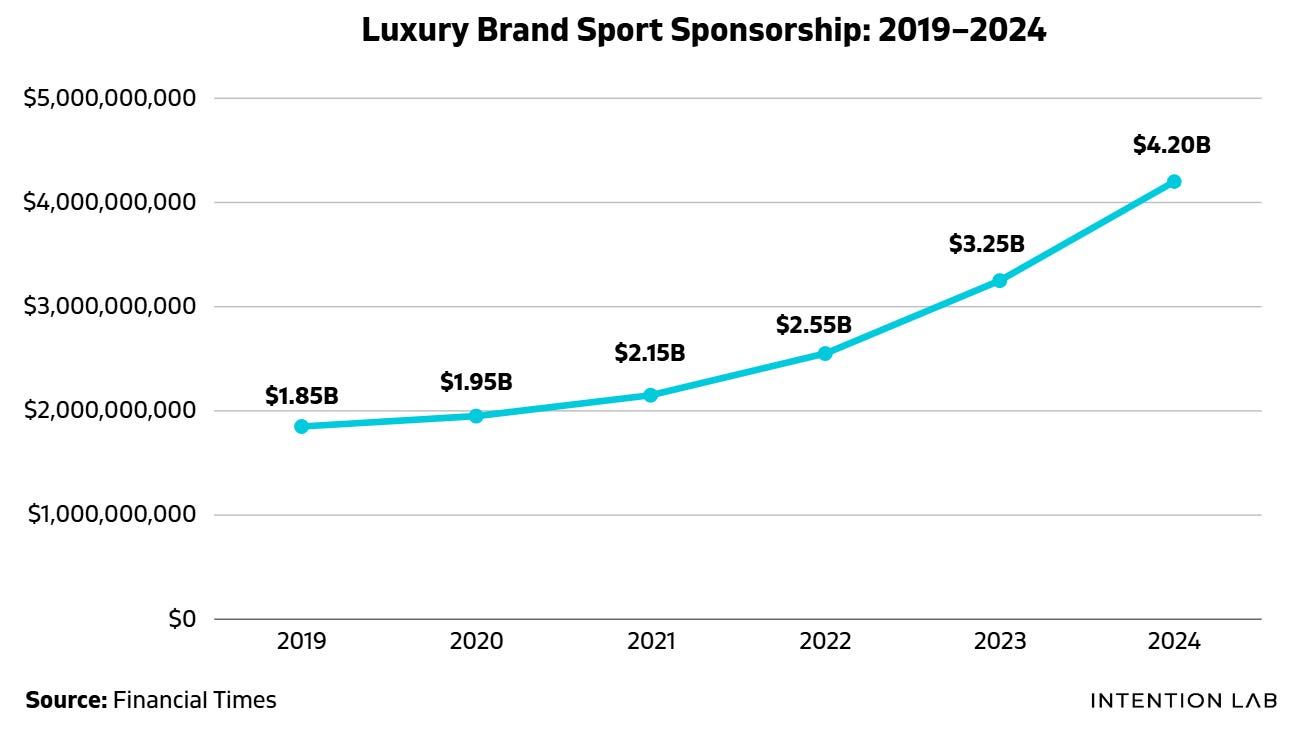
The global sports sponsorship market reached $64.1 billion in 2024 and is projected to hit $144.9 billion by 2034. LVMH’s landmark 10-year partnership with Formula 1, valued at over $100 million annually, replaced Rolex and integrated Louis Vuitton, TAG Heuer, and Moët Hennessy across the sport. LVMH also invested €150 million in Paris Olympics sponsorship. More broadly, 92 of the top 100 global brands now maintain direct sports sponsorships, signalling sports’ centrality to premium brand strategy.
This convergence isn’t coincidental it’s rooted in scarcity. Luxury strategy hinges on controlled scarcity: limited editions, long waiting lists, exclusive access that taps into fundamental human desire for what others cannot have. Live sports now represent one of the last truly scarce entertainment products. You cannot pause a penalty kick or rewind a championship point. Sporting moments happen once, capturing real-time attention at scale when everything else can be consumed on-demand. As Luxury Insight CEO Jonathan Siboni notes, “LVMH is preparing for its next generation of growth, focussing on experiences over products”, anticipating where global attention is moving.
Why It Matters
This shared scarcity principle creates unprecedented strategic alignment. In fragmented media landscapes where audiences skip ads and control consumption, live sports deliver guaranteed real-time attention. For luxury brands, this mirrors their retail model, be present at the right moment or lose the opportunity. Research shows affluent consumers are 23% less likely to recall traditional luxury advertising but 121% are more likely to follow premium sports. Among billionaires, sports indexes as the top hobby for 70% of men and 29% of women, ranking above arts and education.
Our Take
Expect luxury brands to deepen investments as they recognise sports as the premier scarcity-based attention platform. The returns validate this: TAG Heuer reported double-digit sales traffic increases following F1 partnership launch, while Rolex’s brand value increased 138% over five years of Wimbledon sponsorship. Smart properties will emphasise limited-access activations, paddock passes (exclusive behind-the-scenes access to team areas), VIP hospitality, behind-the-scenes moments, mirroring luxury retail’s scarcity playbook. Traditional sponsors lacking this scarcity alignment face displacement as luxury economics reshape sports valuations, proving that in an on-demand world, irreplaceable moments command irreplaceable premiums.
See you next week.
Related Insight: Luxury brands push into mass-market sports despite shift to exclusivity
From the Archives